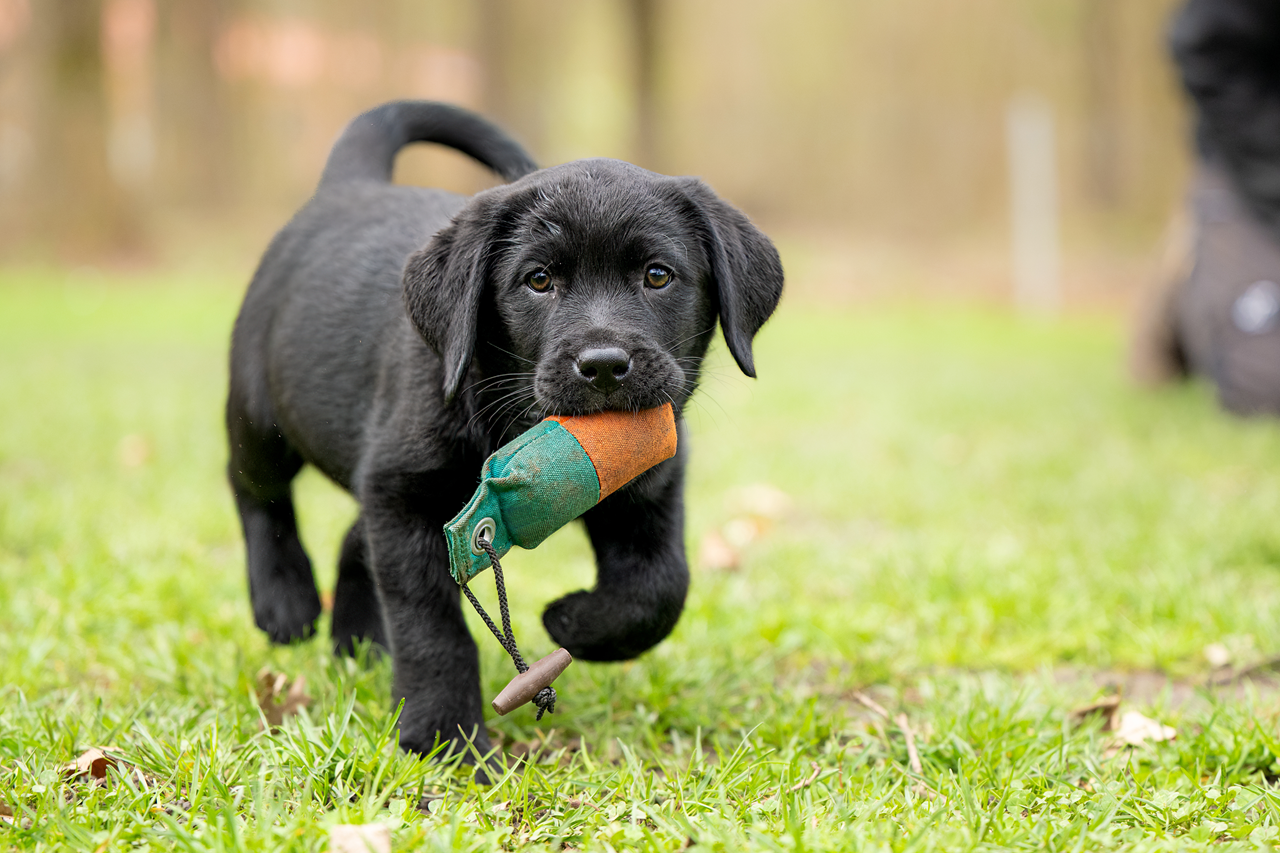
Teaching your dogs to perform tasks is a great way to activate their problem-solving skills and give them rewarding experiences. Exploring, discovering, learning, and collaborating are enormously satisfying for dogs. Like their human companions, dogs are innately social, and they thrive on secure relationships.
So, why do some dogs struggle to learn and remember tasks? It's easy to blame the dog's intelligence, his motivation, or his willingness to cooperate. But blaming the dog bypasses the caregiver's responsibility to uncover the true source of the dog's lack of responsiveness. Does the dog hesitate out of fear? Even if you don't know the reason for the dog's fear, the protocol for addressing it effectively is the same.
The dog is afraid because he believes he's in danger. The belief is rooted deep in his nervous system and is felt throughout his body. It's triggered by a sensation in the environment that causes the dog to relive a traumatic memory. He experiences tight, tense muscles, his gut clenches, his heart beats faster, and his breathing is quick and shallow. His body reacts automatically to the inner sensation of fear. It's not a learned behavior...in fact, it's not even a behavior. It's the innate biological survival mechanism of fight-flight-freeze.
Living things prioritize survival over learning. A fearful dog is biologically unable to learn new tasks or to remember how to perform tasks he's already learned. When survival is activated, thinking and learning are unavailable. You can't teach a drowning person how to swim. Panic shuts down learning.
But training programs fail to acknowledge the dog's inner emotional state of fear and misread it as stubbornness. Their solution is to push through until the dog complies. What these programs fail to understand is that emotional shutdown looks like compliance to the uneducated eye. Training fails dogs when it solves the wrong problem.
What's the appropriate response to a fearful dog?
What it's NOT:
- pushing through
- correcting, punishing
- denying the dog's true feelings by saying, "It's OK. Calm down."
- coaxing, luring
- bribing with food
- desensitizing and counterconditioning
- pressuring the dog to perform by repeating exposures to the fear trigger
- taking the dog's behavior personally
What it IS:
- acknowledging the dog's inner emotional truth, "I understand you're frightened right now."
- being present for the dog unconditionally, without judgement or criticism, "I know this feels scary, but I'm here beside you."
- asking what the dog needs to feel safe: moving away, hiding, comforting voice and touch.
- allowing enough recovery time and then letting the dog rest quietly
- protecting the dog from repeating the triggering circumstances
- building resilience outside of the situation that triggered the fear.
Training fails sensitive dogs when it insists that caregivers do any of the practices in the What it's NOT list above. The only appropriate first response to fear is to create the conditions that allow the dog to feel an inner sensation of safety. It might require removing the dog from training temporarily or permanently. Many clients in my program for sensitive dogs report that their strong relationship with their dogs makes formal training superfluous.
To learn more about an opportunity to advance your expertise with sensitive, anxious, and traumatized dogs, add your name to the Priority List of interested caregivers. You will be first in line to get information when it's available.
Click the button below to add your name to the Priority List.
Yes! I want priority notification


Responses