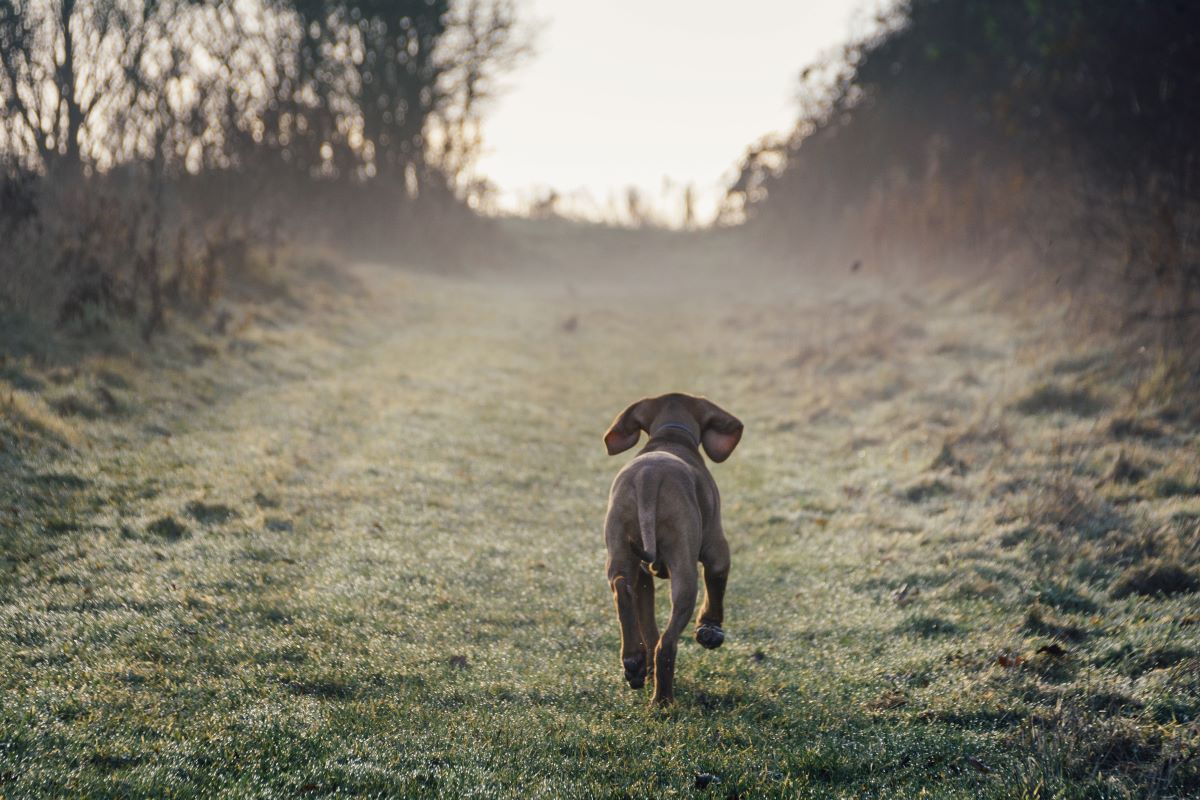
Before I work with someone caring for a sensitive dog, I want to know about the dog's history. Many variables impact dogs physically, emotionally, socially, and mentally. A sensitive dog can be overwhelmed by experiences that balanced dogs take in stride. Yet, some training programs use the same training plan for every dog and don't account for the special circumstances of sensitive or traumatized dogs. The outcome is often unsuccessful. In their anxious emotional state, sensitive dogs can't cope.
Sensitive and traumatized dogs can get stuck in fight/flight and remain vigilant even when no triggers are apparent in the environment. For an anxious dog, however, the triggers never really go away.
Today, we know a lot more about how dogs think, learn, feel, and experience the world. We know that the outdated one-size-fits-all style of training dogs can increase anxiety and decrease the dog's ability to learn. Sensitive, traumatized, or anxious humans require specialized care and support. The same is true for dogs.
Three of the worst training mistakes for sensitive dogs are:
- wrong solution
- wrong method
- wrong assumption
The Wrong Solution
You know the saying, "When you're in a hole, stop digging"? When you're using a "solution" to a behavior problem but the problem gets worse instead of better, it's the wrong solution! Time to stop digging!
One example is the practice of immobilizing a fearful dog:
- short, tight leash, restraint
- telling the dog to sit and look at you, and away from the trigger
- sending the dog to a place and forcing a stay,
- having strangers offer treats to make friends with a fearful dog.
The normal response to fear is motion. Escape...run away! It's nature's survival response to danger. Restraining and immobilizing fearful dogs makes them feel trapped and their last resort is an "aggressive" display that's driven by panic.
A better solution is to mobilize the dog. Escaping brings relief and a felt sense of safety. Support the need to escape what they fear and never force or coax dogs to approach or to accept handling from a person without the dog's consent.
The Wrong Method
Another saying that comes to mind is "When your only tool is a hammer everything looks like a nail." Using the wrong method for a sensitive dog is like using a hammer when you need a screwdriver. You end up with a mess.
Training methods are tools designed to do a specific job. An example of a method that is wrong for sensitive dogs is desensitization.
Desensitization is a tool that is safely used under certain conditions. Unless it's done by a trained professional, it can result in repeated traumatic experiences for the dog. Unfortunately, this method has become the one-size-fits-all method of choice.
A better solution is to build the dog's inner emotional resilience by teaching him to make choices that serve his well-being. Create moments of calm relaxation when the dog is not over-stimulated. Spend quiet time with your dog building a bond of trust so that you will be his safe haven when he's anxious.
The Wrong Assumption
Our human brains don't like uncertainty. So we explain dog behaviors from a human perspective. In other words, we make assumptions.
- The dog knows it's wrong...
- The dog is manipulative...
- The dog is jealous of ___...
- The dog is angry because___...
Attributing self-serving motivations to dogs is unfair when their behavior expresses an unmet need. Dogs, like us, seek safety in a trusted leader.
A better solution is to acknowledge the dog's emotional needs, listen with compassion, and take appropriate action to support the dog emotionally. That means giving your attention to the dog's emotional needs without judgment and accepting the dog in front of you unconditionally.
These are parenting skills that improve with practice. Building a bond of trust between you and your dog is a priority. Your dog must trust you before he can learn from you.

Questions? Let me know in the comments. I'm always eager to hear your feedback.


Responses